

Heatwave: Code red for our warming world
A factual book that reads like horror fiction. A novel set in a blazing summer 50 years ago

This Week, Those Books, which just turned three, links the big international story to the world of books and has a few thousand followers on every continent except Antarctica. We aim to provide, in roughly five minutes, crucial context – from fiction and non-fiction – to the shouty, doomscroll news cycle.
The Big Story:
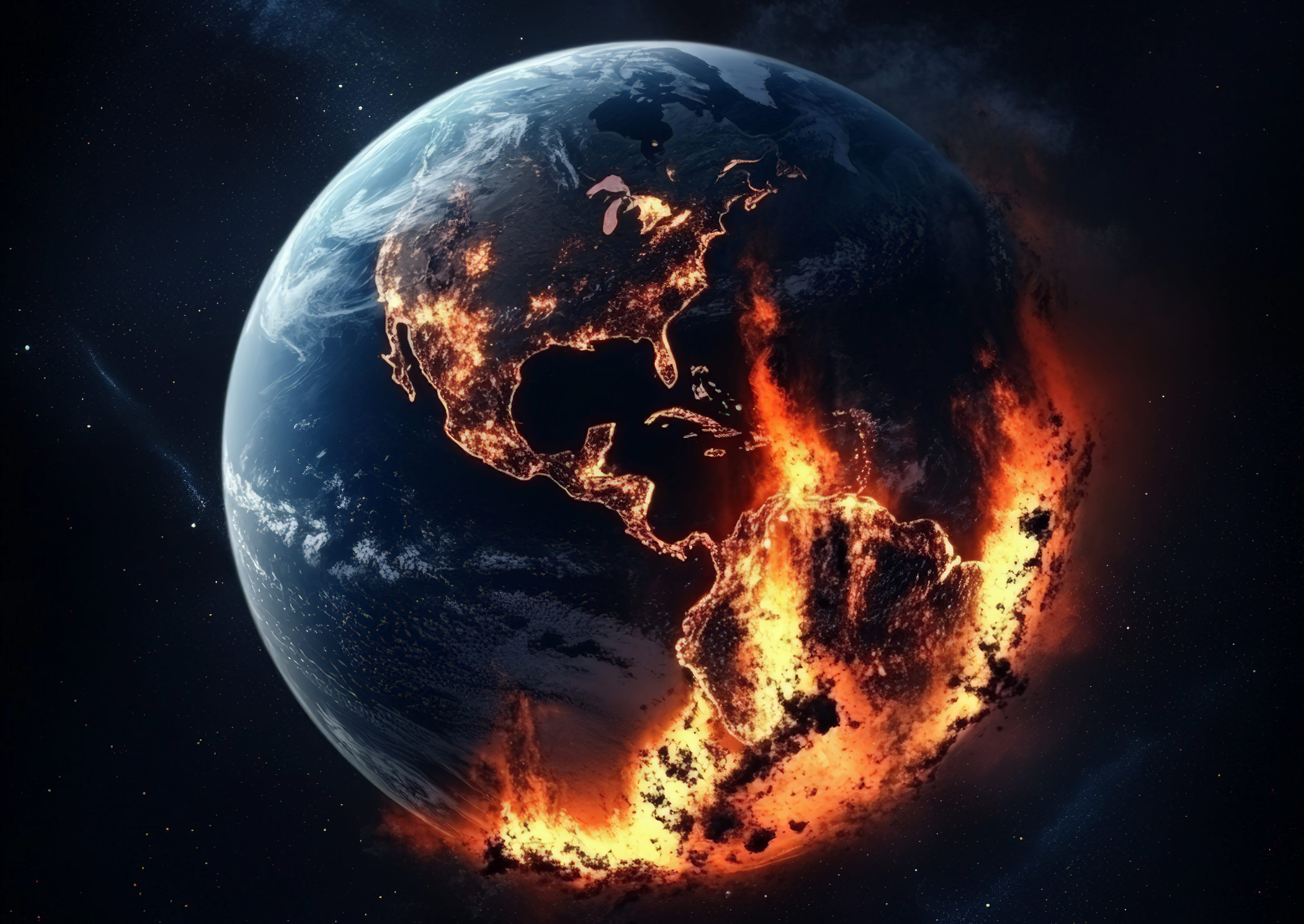
Europe’s scorching heatwave – the most severe and widespread ever to have affected so large a region – is a red alert for our warming world, according to scientists.
New analysis shows that conditions of extreme heat are worsening around the world, with longer, hotter, more frequent heatwaves, even as we continue to burn fossil fuels and increase carbon pollution.1
Climate change is said to have made this year’s heatwave 2°C-4°C worse than it would have been under the same conditions in the second half of the 20th century.2
As our first book notes:
The climate impacts you hear about most often, from sea-level rise to drought to wildfires, are all second-order effects of a hotter planet. The first-order effect is heat. It is the engine of planetary chaos, the invisible force that melts the ice sheets that will flood coastal cities around the world. It dries out the soil and sucks the moisture out of trees until they are ready to ignite. It revs up the bugs that eat the crops and thaws the permafrost that contains bacteria from the last ice age. When the next pandemic hits, the chances are good it will be caused by a pathogen that leapt from an animal that was seeking out a cooler place to live.
More context, fewer walls
This Week, Those Books has no paywalls when we publish. It’s a small operation here at TWTB so if you find our posts useful, thoughtful, and…a conversation starter, please read, refer a friend, and support us with a paid subscription. Cheaper than one matcha latte! You get access to our extensive archives and have the warm glow that comes from promoting informed conversation!
This Week’s Books:
A call to understand and respect heat.
A fictional take on a long ago British heatwave.
Another relevant free-to-read post:

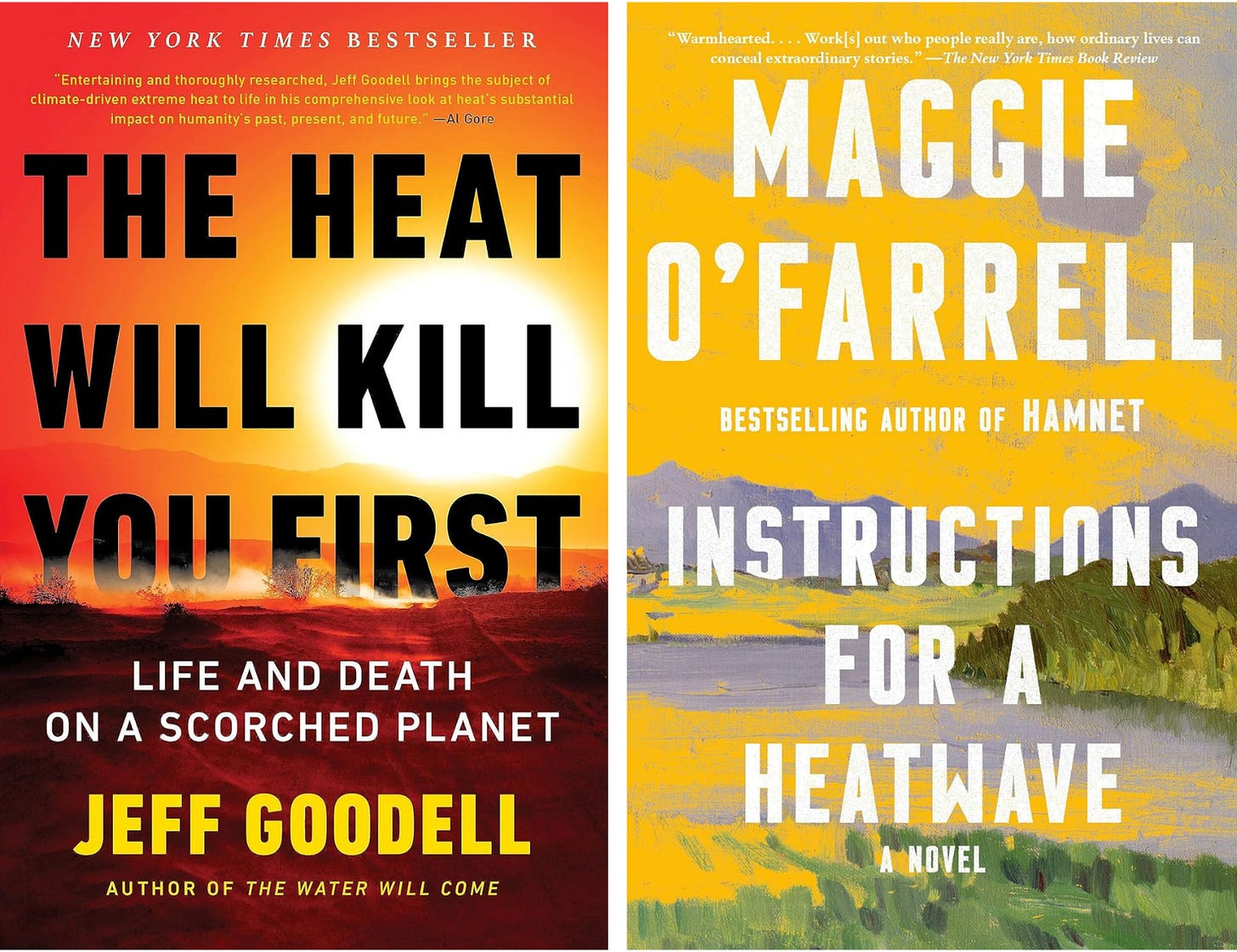
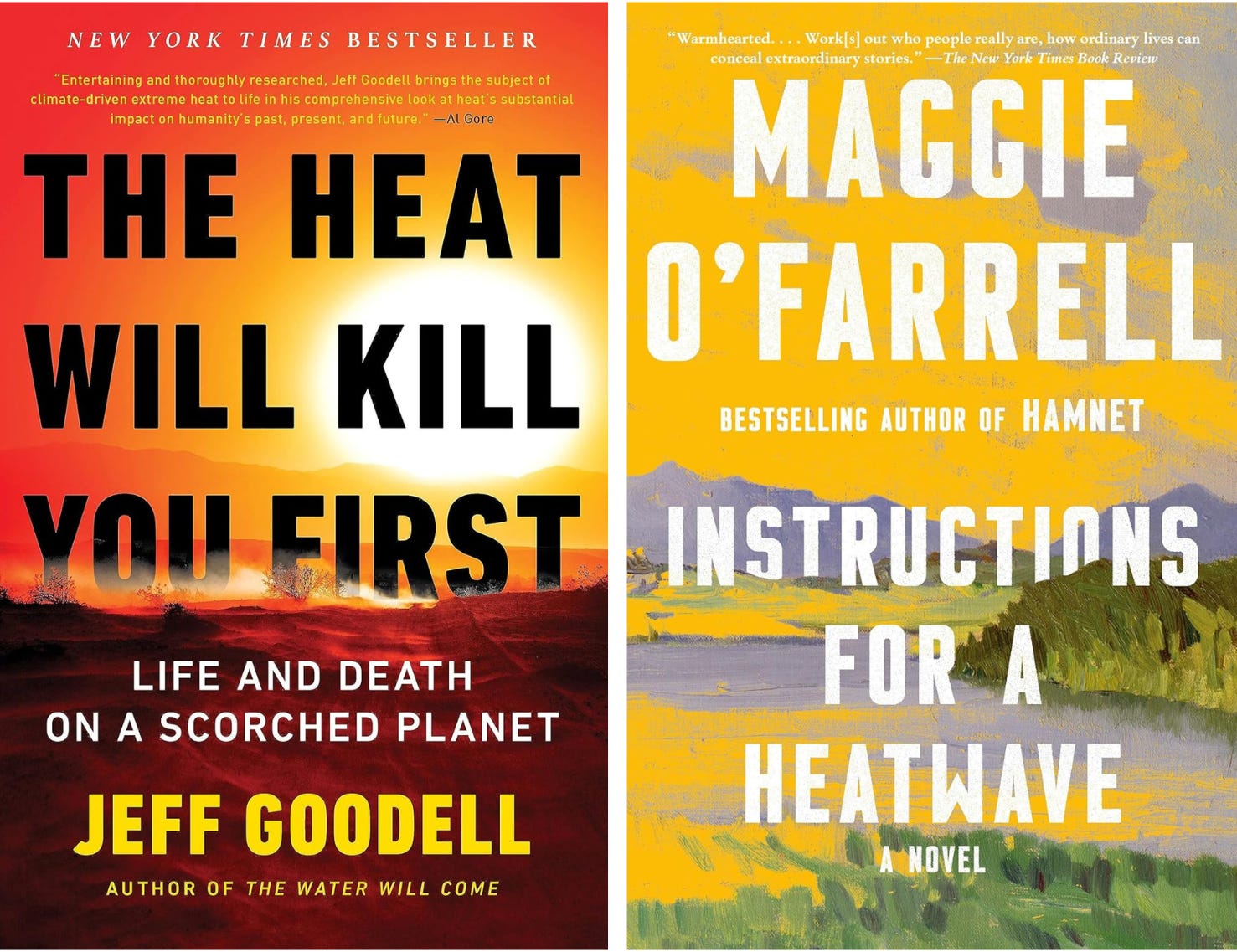
The Heat Will Kill You First: Life and Death on a Scorched Planet
By: Jeff Goodell
Publisher: Little, Brown and Company
Year: 2023
Journalist Jeff Goodell’s book reads like horror fiction about the effects of heat. Except that it’s all true.
He starts with Lytton, a town situated at the confluence of two rivers in British Columbia and the mecca of whitewater rafting. When a heatwave hit in 2021, temperatures rose to 49.4°C and a spark from the steel wheel of a passing freight train ignited an inferno. Lytton burned to the ground.
In northern California, a young couple and their year-old daughter and dog undertake a fateful hike. All were found dead on the trail, having overheated.
But why? This is not the sort of thing you’d expect in either place.
Goodell writes about the Pacific Northwest: “This was not Phoenix, where heat owns the city. Or New Delhi, where heat is both a goddess and a demon”.
But there needs to a new reckoning with our rapidly warming world, says Goodell. We need to understand “heat as an active force, one that can bend railroad tracks and kill you before you even understand that your life is at risk”.
To properly understand the consequences of heat, we need to get words and their meanings right. Global warming, for instance, sounds too “gentle and soothing, as if the most notable impact of burning fossil fuels will be better beach weather”. Conventional notions of what it means to be hot are also dangerously misleading. “In pop culture, hot is sexy. Hot is cool. Hot is new…Heat is an expression of passion”.
But in a warming world, heat is deadly and “predatory”, culling the most vulnerable people. Even that, Goodell warns, will change. “As heat waves become more intense and more common, they will become more democratic”.
Choice quotes:
Scientists don’t fully understand how fast this heat can move or where it will appear next (until it happened, a killer heat wave in the Pacific Northwest seemed about as likely as snow in the Sahara). But there is one thing scientists do know: this is a form of heat that has been unleashed upon us through the burning of fossil fuels. In this sense, extreme heat is an entirely human artifact, a legacy of human civilization as real as the Great Wall of China.
The last time the Earth was hotter than it is today was at least 125,000 years ago, long before anything that resembled human civilization appeared.
Even Antarctica, the coldest place on Earth, is not immune. In March of 2022, a heat wave invaded the ice-bound continent, pushing temperatures seventy degrees—seventy degrees!—above normal.
Instructions for a Heatwave: A novel
By: Maggie O’Farrell
Publisher: Vintage
Year: 2013
This novel is set in the 1976 UK heatwave, which was regarded as an extraordinary weather event 50 years ago. The patriarch of the Riordan family, retired bank worker Robert, suddenly disappears one hot London morning. He walks away, plunging the family into an unexpected crisis. Robert’s wife Gretta, who prides herself on upholding Irish cultural and Catholic traditions, reaches out to her three adult children for help. But Michael Francis, Monica and Aoife all have limitations of their own.
What’s interesting about this novel is the heatwave that seems so mild compared to today. Back in 1976, it was shocking and unprecedented that maximum temperatures in Britain had exceeded 32°C for more than two weeks. But according to two new sets of scientific analysis, today’s heatwaves are about three degrees Celsius warmer compared to 1976.
Choice quotes:
The heat, the heat. It wakes Gretta just after dawn, propelling her from the bed and down the stairs. It inhabits the house like a guest who has outstayed his welcome: it lies along corridors, it circles around curtains, it lolls heavily on sofas and chairs. The air in the kitchen is like a solid entity filling the space…
…he surveys the damage wreaked by this never-ending heatwave: the park is no longer the undulating green lung he has always loved…a space of differing shades of green: the full emerald sweeps of grass, the splintering verdigris of the paddling pool, the lime-yellow of the light through the trees. But now the grass is a scorched ocher, the bare earth showing through, and the trees offer up limp leaves to the unmoving air, as if in reproach.
The Backstory:
The 10 hottest years worldwide are in the last decade.3
In the past 50 years, average global temperatures have risen by about 1ºC.
Europe is warming faster than any other continent and twice the world average: 0.56ºC a decade.
On a single day in late April 2026, all of the top 50 hottest cities in the world were located in India.
African glaciers, including Mt Kilimanjaro – home to Africa’s largest ice fields – are vanishing.
The International Labour Organization estimates that around 70% of the global workforce (2.41 billion workers) are exposed to excessive heat.4
Heat-related deaths now make up more than 3% of mortalities in 26 countries, mostly in Africa and the Middle East.
Found this post useful? Buy me a cuppa

If you enjoyed this read, please forward to a friend to sign up.
Connect with me on: LinkedIn | X | Bluesky | Facebook | Threads | YouTube
Email: thisweekthosebooks@substack.com

Scientists from international consortium World Weather Attribution say the June 2026 heatwave is the most severe on record in western Europe. https://www.worldweatherattribution.org/wp-content/uploads/FINAL-WWA-Scientific-Report-European-Heatwave.pdf
ClimaMeter, a consortium of scientists based at France’s Institut Pierre-Simon Laplace. https://www.climameter.org/
World Meteorological Organization press release. January 14, 2026. https://wmo.int/news/media-centre/wmo-confirms-2025-was-one-of-warmest-years-record
Heat at work: Implications for safety and health. International Labour Organization, 2024. https://www.ilo.org/sites/default/files/2024-07/ILO_OSH_Heatstress-R16.pdf
Harvard researchers’ April 2026 paper, ‘How hot is too hot?’ says nearly 380 million Indians are “engaged in heat-exposed labour”. https://salatainstitute.harvard.edu/wp-content/uploads/2026/04/April-2026-Critical-Perspectives-on-Extreme-Heat-in-India_web.pdf