


This Week, Those Books links the big international story to the world of books and has a few thousand followers, who are on every continent except Antarctica. We aim to provide, in roughly five minutes, crucial context – from fiction and non-fiction – for the shouty news cycle. In other words, This Week, Those Books makes you smarter, faster.
The Big Story:
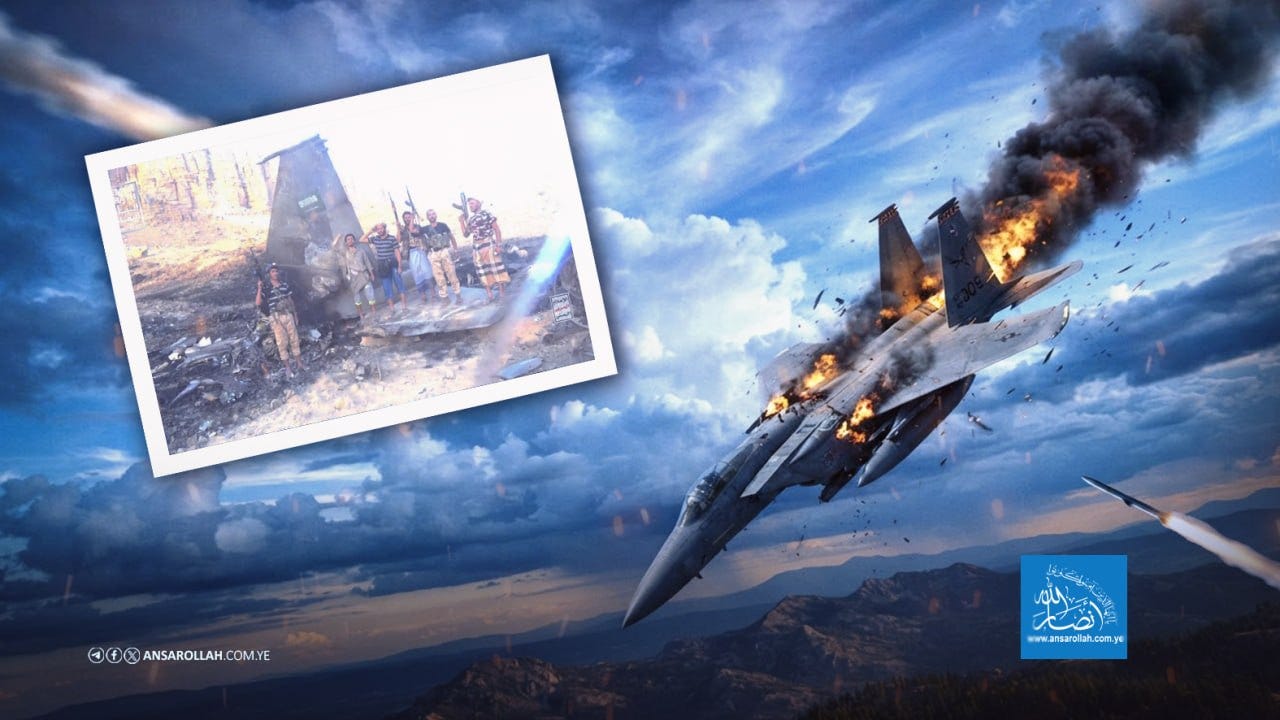
Yemeni Houthi fighters’ conquest of the strait that connects the Red Sea and the Gulf of Aden means Iran and its allies now control the two main routes for shipping oil out of the Middle East and have leverage over a quarter of the world’s oil.
Six months after Donald Trump began the US-Iran war, the Houthis now matter a lot – to you and to everyone, everywhere.
Power cuts, fuel rationing and price rises are sparking protests across the world, not least the Philippines, Portugal, Syria, Indonesia, Guatemala and Bangladesh.
This Week’s Books explore:
Who are the Houthis and what’s the conflict in Yemen really about?
What do ordinary Yemenis think and feel?
More context, fewer walls
This Week, Those Books has no paywalls when we publish. It’s a small operation here at TWTB so if you find our posts useful, thoughtful and…a conversation starter, please share and support us with a paid subscription. Cheaper than one matcha latte! You get access to our extensive archives and have the warm glow that comes from promoting informed conversation!
A relevant free-to-read post from the archives :

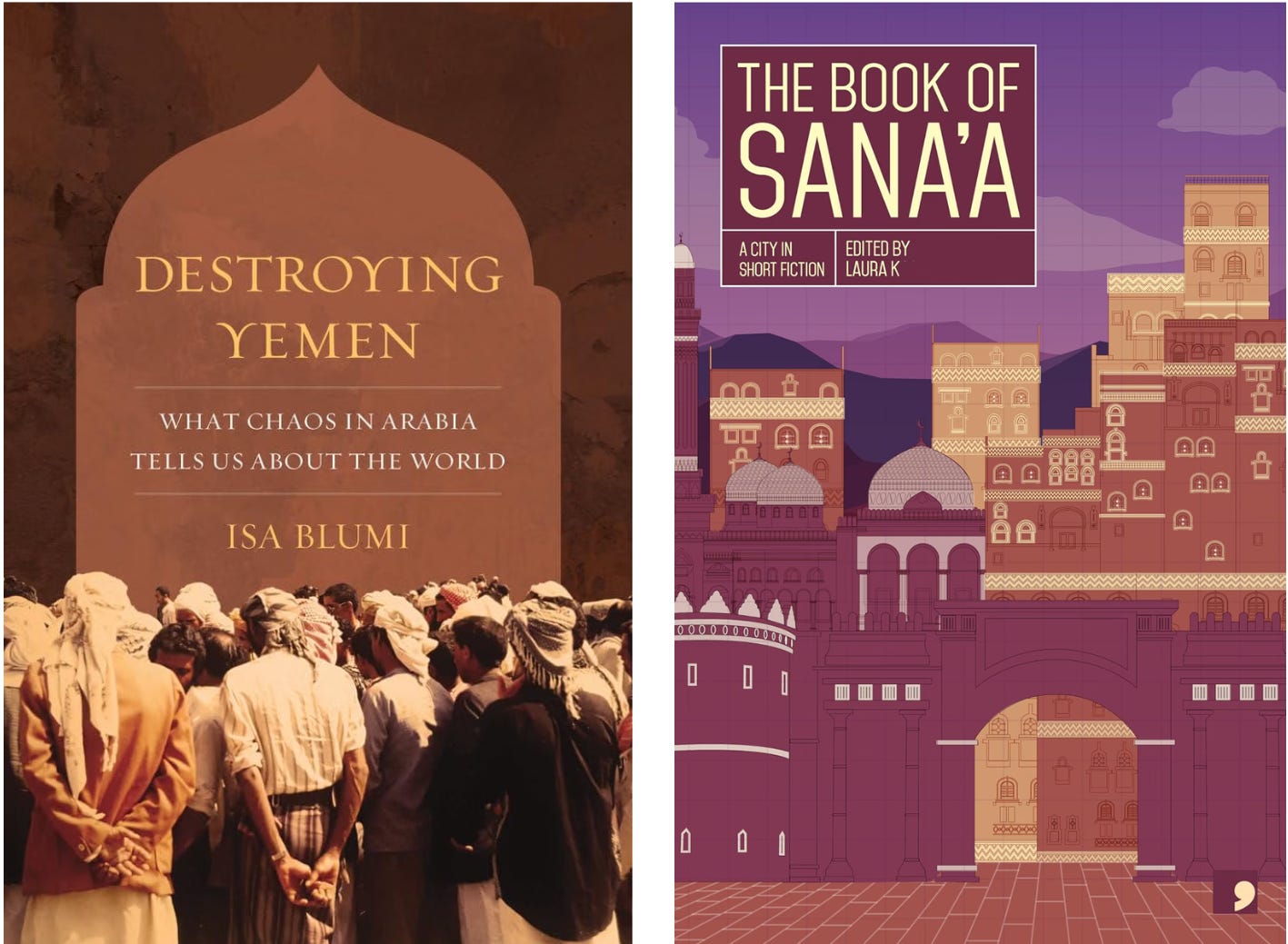
Destroying Yemen: What Chaos in Arabia Tells Us about the World
By: Isa Blumi
Publisher: University of California Press
Year: 2018
Stockholm University Professor Isa Blumi’s knowledge of Yemeni history is only exceeded by his appreciation of its tendency to defy “the globalization trends infesting the larger world”.
This book tries to lay bare the roots of the conflict that has continued for more than a decade and drawn in the larger world. Blumi starts by insisting we abandon “journalistic omerta” and call the conflict what it is. Not a civil war but “a continued foreign effort to subordinate Yemenis”.
Blumi argues that Yemen is a victim of globalisation and predatory capitalism. The Zaydi Imamate in North and Middle Yemen offered “principled resistance” to the “encroachments of finance capitalism [which] resulted in one of the unique cases of indigenous, independent political order to survive World War II”. Under Imam Yahya and his sons, Yemen initially refused to operate in the dollar-based global economy imposed by the 1944 Bretton Woods agreement.
Occupation by Egypt in the 1960s brought in “invasive” new imperial tools in the form of “development aid” and promised modernisation, but even with the Imamate destroyed, Yemeni resilience still upset plans to integrate the country into international markets and make it servile to the “needs of certain regional and global interests”. For decades, Yemen failed to be seduced by “the image of a young woman in Egypt, Brazil, or Turkey leaving work, drinking a bottle of Pepsi, chewing gum, and listening to rock and roll [which] was the idealized expression of societies attaining a certain developmental status in the world”. From the 1970s, however, “many Yemenis were dragged into a strategy that invested in the destruction of their society”. This included the late President Ali Abdullah Saleh and his aides, who opened up Yemen to foreign plundering of its resources.
Blumi argues that the Houthis are the main Yemeni group fighting against foreign subordination.
Some scholars contest aspects of Blumi’s analysis1 but this topical book is thought-provoking, even as Yemen suffers on the pretext of foreign support for the “restoration of democracy and stability”.
Choice quotes:
Whether by the Egyptians in the 1960s or the present USA- and Saudi-led coalition, Yemenis have faced bombardment and embargoes that put millions into conditions of starvation in the name of altruistic, even humanistic “progressive” agendas. In response, Yemenis have a long history of resistance to empire’s invasive “humanitarianism.”
It was quite clear that the revenues produced from their sale of resources—cheap oil, minerals, coffee, workers’ lives – were not meant for savings but rather consumption. The ideal modern Arab, in other words, was one who became a consumer.
For many proud Yemenis, by the late 2000s Yemen had been reduced to a bordello for the Middle East by its corrupted political elites.
The Book of Sana’a
Edited by Laura Kasinof
Comma Press
Year: 2025
The first major collection of short stories by Yemeni writers in English translation, does many things at the same time: it raises a smile, paints a picture of Yemeni capital Sana’a and its residents and prompts sober contemplation of the effects of war.
These 10 stories have a remarkable range, from political satire to Kafkaesque pathos and humour. War often features, as a dark force.
In Rim Mugahed’s ‘The Ruse of Sana’a’, the young woman masquerading as a male grocery delivery boy in order to feed her family recalls when a bridge used to bear pictures of Lebanese singer Nancy Ajran (dubbed by Spotify as Queen of Arab Pop). “Now, all the pictures were of those killed in the war, or signs urging people to martyr themselves in holy war”.
In Abdoo Raj’s surreal ‘Borrowing a head’, people’s heads fall off at will, are lent out and the narrator finds the war does strange things to memories.
Wajdan Al-Shathali’s ‘The Jacket’ has a visitor from Hadhramaut facing three frightening encounters with security forces in the course of one evening in Sana’a. But on returning to his hotel, he finds the jacket he was constantly ordered to take off hanging behind the door!
A sign of post-traumatic stress disorder?
These stories certainly indicate the horrors that Yemenis live through. Read them and you come away feeling you have met Sana’anis and partaken of khameer together.
Choice quotes:
[In place of the rubbish truck] other sounds set up camp in our lives: the roar of warplanes, the death-whistle of rockets, the enormous explosions, the sound of gunshots being fired at various distances, the silence of ambulances after they stopped operating altogether, and finally the lamenting of the minarets that became a daily occurrence in every neighbourhood.
One thing I’ve learned since the war broke out is that people try to steer clear of their heads as though they were landmines. They flee painful memories that their heads tempt them to revisit.
The Back Story:
The Houthis, officially Ansar Allah, belong to the Saada governorate in northwestern Yemen, traditional heartland of the Imamate.
In the early 2000s, the Houthis condemned Yemeni President Saleh’s alliance with the US and Saudis.
In 2014, the Houthis took over Sana’a and the government.
From March 2015, a Saudi-led coalition, with US-UK support, started to wage war on Yemen. The conflict has displaced millions.
From October 2023, the Houthis targeted international shipping in response to Israel’s actions in Gaza.
From March to May 2025, the US conducted air and naval strikes against the Houthis.
On September 15, 2026, the Houthis gained control of the Bab al-Mandab strait, through which nearly 15% of global sea trade passes.
Found this post useful? Buy me a cuppa

If you enjoyed this read, please forward to a friend to sign up.
Connect with me on: LinkedIn | X | Bluesky | Facebook | Threads | YouTube
Email: thisweekthosebooks@substack.com

The Middle East Journal review (free PDF) by Austrian Academy of Sciences anthropologist Marieke Brandt, author of The Tale of a Feud: Domination, Resistance, and Agency in Highland Yemen